
 العربية

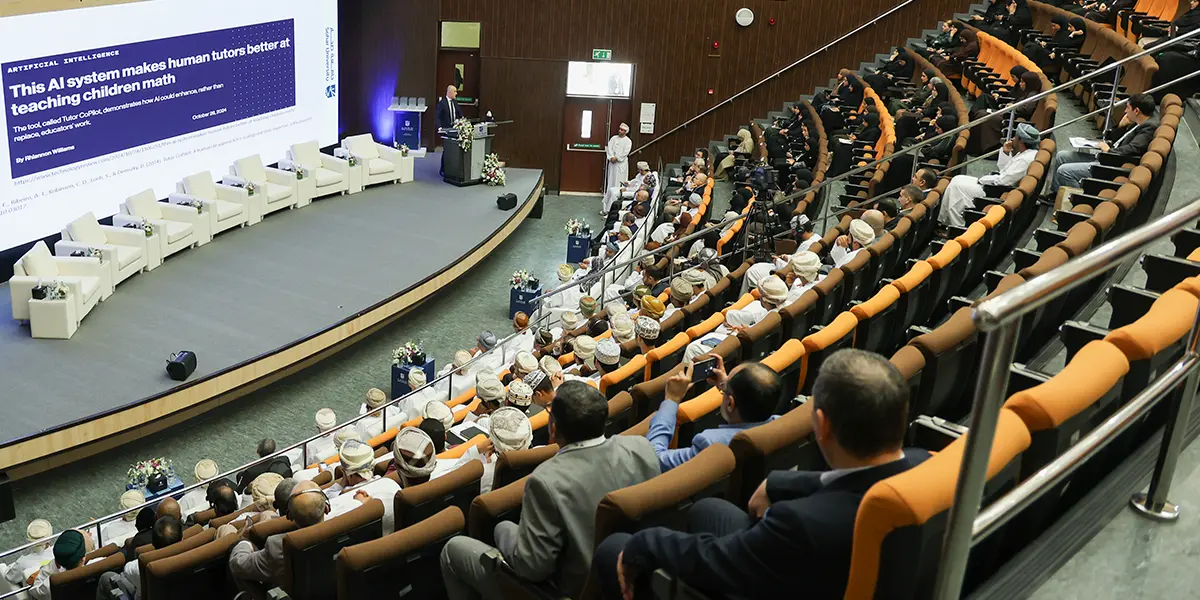
Sohar, Oman – Sohar University inaugurated the Artificial Intelligence Conference: Navigating Digital Skills and Decent Work Conference on Sunday, February 9, 2025, at its campus. The event is organized in collaboration with the United Nations Educational, Scientific, and Cultural Organization (UNESCO) – Doha Regional Office and the National Commission for Education, Culture, and Science. The university also launched SOHAR UNIVERSITY RESEARCH CONFERENCE (SURC8) as part of the event. The conferences are held under the patronage of H.E. Professor Rahma bint Ibrahim Al Mahrouqi, Minister of Higher Education, Research, and Innovation.
The two conferences aim to enhance research and innovation in artificial intelligence (AI) and various academic disciplines, fostering an environment of innovation in higher education. Additionally, they seek to develop digital and professional skills, explore the global digital transformation agenda, and strengthen international collaboration by forging partnerships between Sohar University and global organizations. The two events also provide an academic platform for students and researchers to showcase innovations emanating from students’ studies and projects, engage in specialized scientific discussions, and contribute to sustainable development goals (SDGs) by integrating AI and modern technologies into various sectors.
The conference featured keynote speakers from various institutions within the Sultanate, including Sultan Qaboos University and the University of Technology and Applied Sciences. Additionally, international experts participated from Australia, Finland, China, USA, Lebanon, and Qatar. Participants in the two conferences represent 13 countries.
The first day of the conference commenced with an opening address by Dr. Hamdan Al Fazari, the Vice Chancellor of Sohar University, in which he said “We believe that universities have the major role in equipping their students with best knowledge and skills to meet market demands. To further this regard, Sohar University has embraced AI technologies to augment its educational offerings and administrative processes. In addition, the university offers an AI program at the bachelor’s level and has implemented AI-powered chatbots to deliver personalized support to students; virtual classrooms for remote learning, and predictive analytics tools to identify at-risk students and allow for early intervention. In this way we hope to show the readiness of Higher Education educators in the AI era. We also understand the need to pursue the future of skills and job transformation with AI. This conference will discuss these topics and also the importance of ethics in the era of AI.”
Dr Anasse Bouhlal, Regional Programme Specialist for Higher Education and TVET, UNESCO Regional Office for GCC and Yemen, And Mr. Bader Suliman Al Harthy, Assistant Secretary – General at the Oman National Commission for Education, Culture, and Science, he said “The Sultanate of Oman fully recognizes that digital transformation is no longer an option but an absolute necessity imposed by the changes of the modern era. It serves as a fundamental pillar for achieving economic and social progress and reflects a deep awareness of the importance of intelligent integration between technologies, processes, and digital skills across various sectors and levels.”
The event featured seven distinguished keynote speakers who provided valuable insights on key topics. Dragan Gasevic from Monash University, Australia, explored Ethics and Rational AI, while Zian Cao from UNESCO-ICHEI, China, discussed the Readiness of Higher Education Educators in the AI Era. Prof. Abdulnasir Hossen, UNESCO Chair on AI at Sultan Qaboos University, addressed the Future of Skills and Job Transformation with AI, and Dr. Musab Al-Rawi from the University of Technology and Applied Sciences presented on Ethical AI for Lifelong Learning.
Additionally, Mr. Ville Valtonen from MinnaLearn, Finland, examined AI and the Future of Skills and Job Transformation, while Dr. Salim M. Araji from ESCWA’s Future of Work initiative introduced the ESCWA Skills Monitoring Tool. The session concluded with Professor Dale Kiefer from the University of Southern California, USA, who highlighted how DISCO offers an opportunity to enhance Oman’s digital skills for coastal resource management.
The first day concluded with an interactive panel discussion, featuring all seven keynote speakers and moderated by Nur Naha Binti Abu Mansor, Dean of the Faculty of Business at Sohar University. The conferences will continue over two days, gathering a distinguished group of researchers, academics, and experts from local and international institutions to exchange knowledge and insights in the fields of artificial intelligence and scientific research.