
 العربية

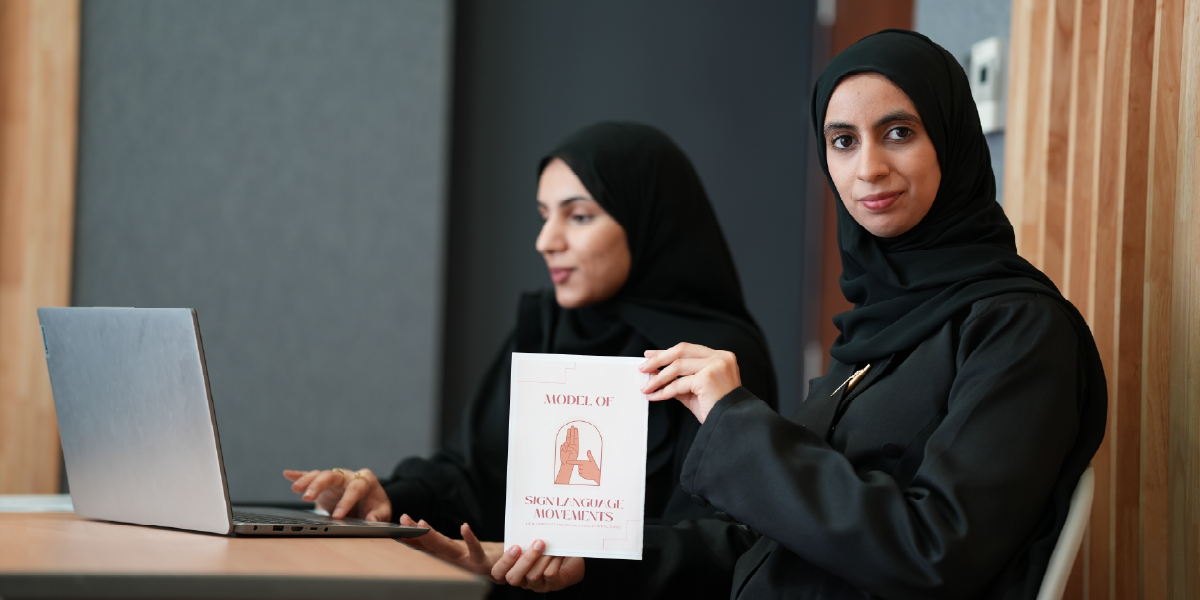
In an era where digital transformation is reshaping every corner of society, inclusive technology remains one of the most vital areas of innovation. A groundbreaking initiative from the Faculty of Computing and Information Technology at Sohar University is set to revolutionize the way individuals with hearing disabilities communicate, offering hope for deeper integration into the community and workplace.
Titled “Breaking Barriers: Empowering Communication for Omani Individuals with Hearing Disabilities,” this project tackles a long-standing challenge: bridging the communication gap between deaf individuals and the hearing population. Although Oman has made commendable strides in supporting persons with disabilities, many still face difficulties accessing essential services, educational opportunities, and employment due to communication barriers.
The project team has developed a user-friendly web-based platform that leverages artificial intelligence to facilitate seamless, real-time communication. Unlike traditional methods that rely heavily on human interpreters or limited resources, this system offers a digital bridge between sign language users and those who communicate verbally. By integrating speech-to-text, text-to-speech, and real-time sign language recognition, the platform provides a flexible tool that can be used across workplaces, schools, healthcare settings, and in daily life.
The importance of this innovation cannot be overstated. Communication is a fundamental human right and a key enabler of inclusion and independence. For individuals with hearing impairments, effective communication is essential not only for personal interaction but also for professional advancement and full participation in society. This platform is designed to reduce feelings of isolation and open new doors of opportunity by making communication more accessible and equitable.
What sets this project apart is its strong technical backbone. The system combines web technologies like HTML, CSS, and JavaScript with cutting-edge tools such as Google’s MediaPipe Hands for sign language recognition and the Web Speech API for converting speech into text and vice versa. Users can easily switch between modes—whether they are deaf or hearing—to tailor the communication experience to their needs. Importantly, the solution is designed to run on standard devices, requiring no specialized hardware, which makes it highly accessible and scalable.
In its current phase, the project utilizes a small, customized dataset designed to test the system and demonstrate practical use cases. While this has proven effective for initial trials, the next phase of development is set to adopt a comprehensive dataset, aiming for greater accuracy and a wider range of sign language gestures and speech patterns. This will enable the system to serve a broader user base with improved precision and adaptability.
Moreover, the project is aligned with Oman Vision 2040, which emphasizes inclusivity and the empowerment of people with disabilities as a national priority. By providing a practical, scalable solution, the project contributes directly to building a more inclusive society, where individuals with hearing impairments can engage fully in all aspects of life.
Sohar University remains deeply committed to the advancement of Oman by equipping its students with cutting-edge knowledge and practical skills. Through initiatives like this, the university not only nurtures innovation but also strengthens its ties to the local community, supporting national efforts to achieve the ambitious goals of Oman Vision 2040.
While still in its early stages, the system has shown promising results in tests, successfully recognizing sign language gestures and spoken words with impressive accuracy. The team envisions continuous improvements, with plans to expand the gesture database, enhance recognition algorithms, and incorporate additional languages to meet diverse needs.
In a world increasingly driven by technology, ensuring that no one is left behind is a responsibility we all share. This project stands as a testament to the power of innovation when it is guided by empathy and a commitment to social good. By breaking down communication barriers, it brings Oman one step closer to a fully inclusive society—where everyone, regardless of ability, has a voice.